A Major Step Toward Accessible Screening and Care
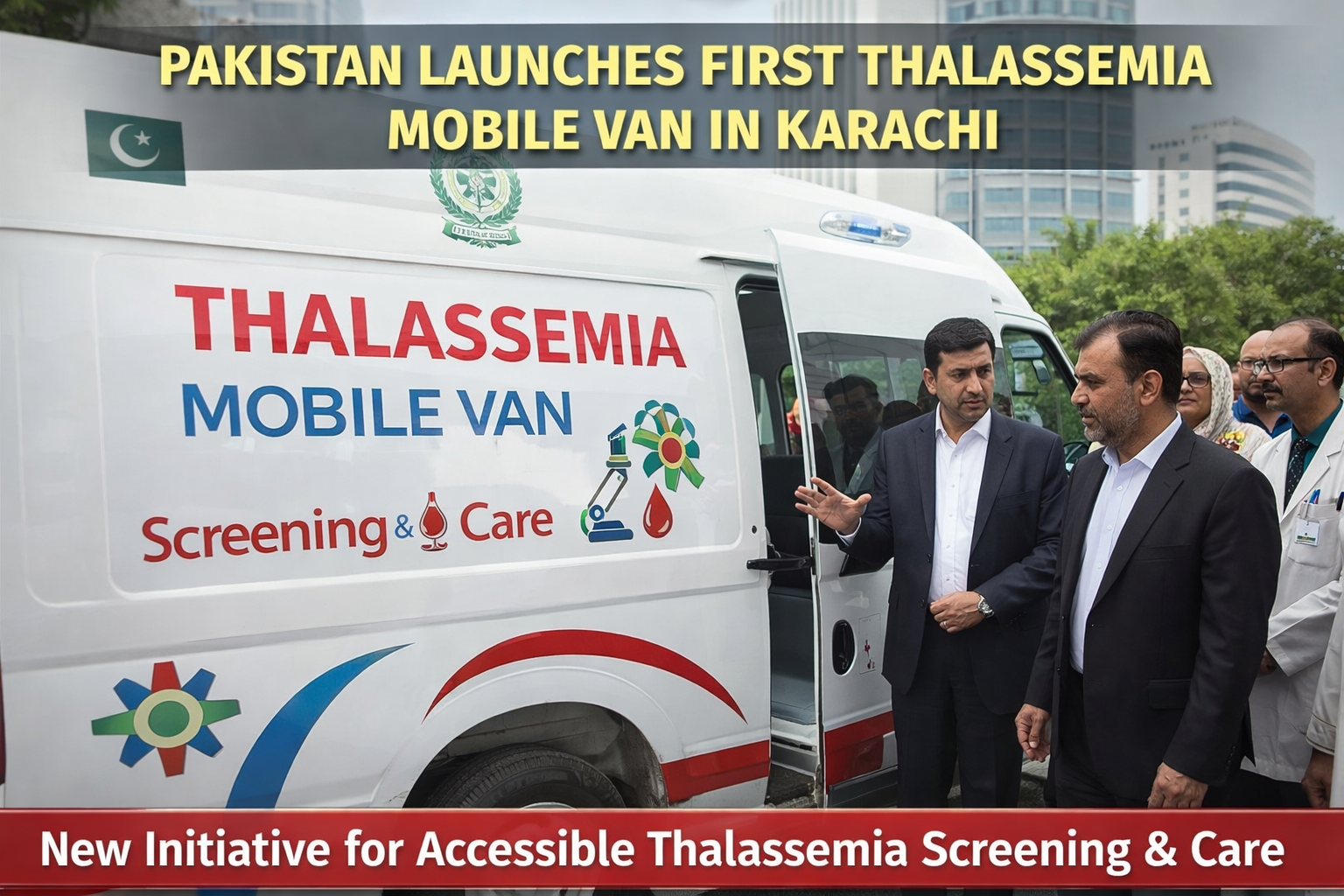
Pakistan has inaugurated its first-ever Thalassemia mobile van in Karachi, marking a significant move to improve access to screening and healthcare for patients suffering from the genetic blood disorder. The initiative aims to reach underserved communities and provide timely testing and support.
Rising Concern Over Thalassemia Cases
Speaking at the inauguration ceremony, Federal Health Minister Mustafa Kamal expressed serious concern over the increasing number of thalassemia patients in the country. He described the situation as alarming and attributed it to negligence by both the government and the general public in adopting preventive measures.
Call for Mandatory Premarital Testing
The minister strongly emphasized the need for mandatory premarital thalassemia testing, particularly for males. He explained that when two carriers of thalassemia minor marry, there is a high risk of their child being born with thalassemia major. Despite widespread awareness, he noted that very few people undergo testing before marriage.
Treatment Challenges and Government Measures
Highlighting treatment options, Mustafa Kamal stated that regular blood transfusions and bone marrow transplants remain the primary treatments for thalassemia. However, finding a compatible bone marrow donor is extremely difficult, with only one in 50,000 patients securing a match. To address this, the government has simplified pre-transplant approval procedures to ensure quicker access to life-saving treatment.
Preventing Future Cases Through Awareness
The minister urged authorities to make thalassemia screening mandatory before marriage to prevent the birth of children with severe forms of the disease. He also spoke about broader public health challenges, including resistance to vaccination campaigns such as polio, where vaccines are sometimes falsely portrayed as foreign conspiracies.
Parental Responsibility in Child Health
Concluding his address, Mustafa Kamal stressed that the ultimate responsibility for protecting children’s health including those affected by thalassemia lies with parents. He called for greater awareness, responsible decision-making, and cooperation to combat preventable diseases.