Eating healthy can feel expensive.
Fresh produce, lean proteins, whole grains, and other nutrient-dense foods can add up quickly, especially when grocery prices are already putting pressure on household budgets. But eating well does not have to mean buying expensive specialty products, shopping exclusively around the perimeter of the grocery store, or spending hours preparing elaborate meals.
In many cases, the biggest difference comes from how you shop, plan, and use the food you already have.
Start With What You Already Have
Before making a grocery list, take a quick look through your refrigerator, freezer, and pantry.
That forgotten bag of rice, can of beans, frozen vegetables, or pasta sitting in the back of the cabinet can become the starting point for a meal. Planning around foods you already own can reduce unnecessary purchases and help prevent food from going to waste.
Don’t Automatically Assume Fresh is Best
Fresh produce is nutritious, but it isn’t the only option.
Frozen and canned fruits and vegetables can also contribute important nutrients to a healthy eating pattern. They can also be easier to store, which may reduce the amount of food that ends up in the trash because it spoiled before you had a chance to eat it.
When buying canned vegetables, beans, or other packaged foods, compare nutrition labels and consider options lower in sodium or products that can be drained and rinsed.
Frozen vegetables can be particularly useful because you can use only what you need and keep the rest for another meal.
Build Meals Around Affordable Staples
Some of the most budget-friendly foods are also remarkably versatile.
Think:
- Beans and lentils
- Eggs
- Oats
- Rice
- Potatoes and sweet potatoes
- Pasta
- Peanut butter
- Canned tuna or other canned fish
- Frozen vegetables
- Bananas and apples
- Plain yogurt
- Milk or fortified milk alternatives
A healthy meal does not need to contain an expensive protein, several fresh vegetables, and a complicated grain combination.
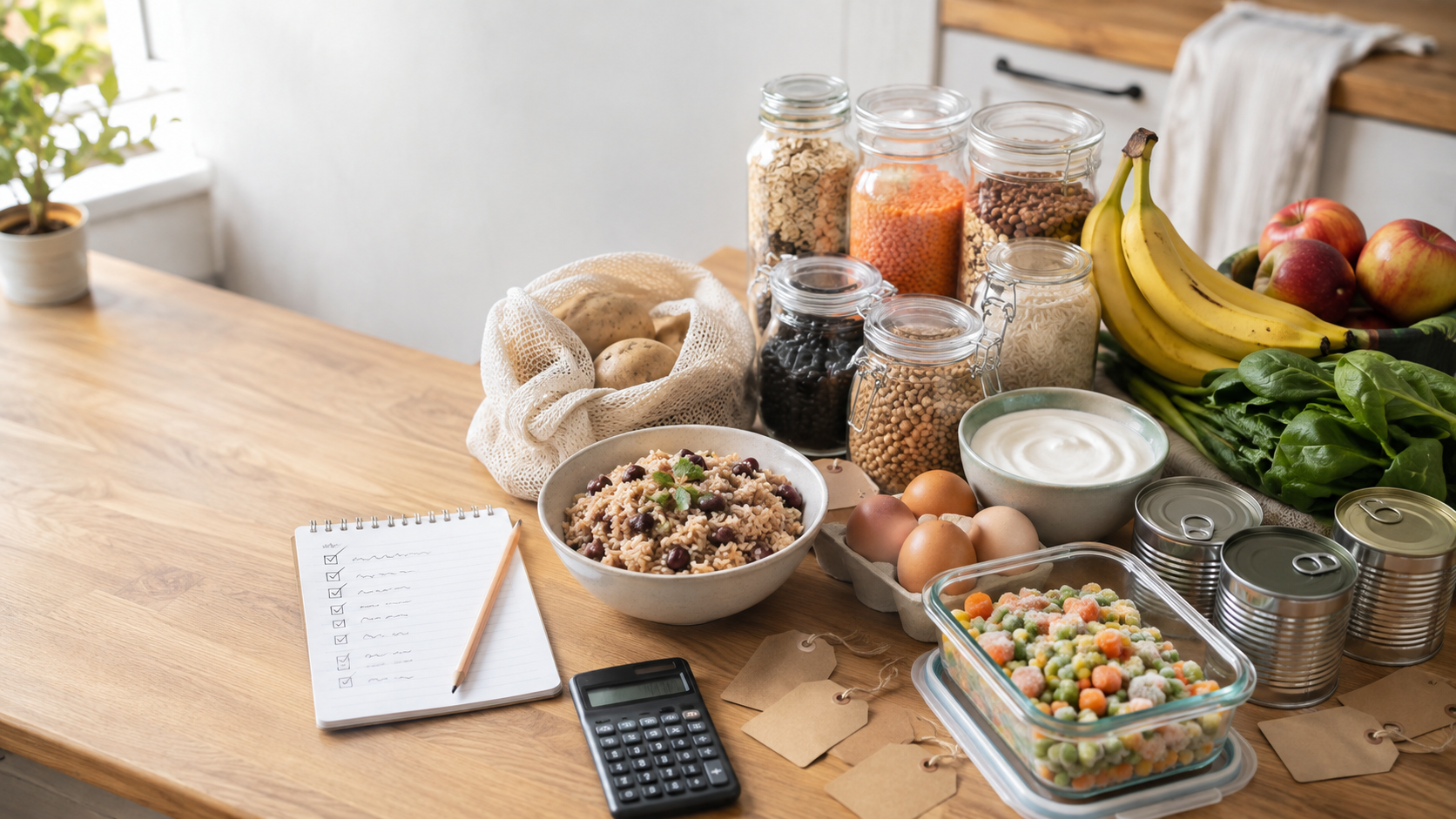
A bowl of rice and beans with frozen vegetables can be a nutritious meal. Eggs and toast with fruit can make an inexpensive breakfast. Oatmeal topped with peanut butter and a banana can provide carbohydrates, protein, fat, and fiber without requiring a long ingredient list.
The goal isn’t to make every meal perfect.
The goal is to make nutritious choices easier and more affordable most of the time.
Compare the Price, Not Just the Package
A larger package isn’t always the better deal, and a cheaper package isn’t necessarily the better value.
When comparing similar products, look at the unit price when it is available. This can help you determine how much you’re actually paying per ounce, pound, or other standard unit.
Nutrition labels can also help you compare products. The FDA recommends paying attention to serving size and using the % Daily Value to understand how much a nutrient contributes to your overall diet. As a general guide, 5% Daily Value or less is considered low, while 20% or more is considered high.
This can be especially useful when comparing packaged foods that may look very similar on the shelf.
For example, you might compare two cans of soup and find that one contains considerably more sodium per serving. Or you might compare two breakfast cereals and discover that one provides substantially more fiber with less added sugar.
The cheapest option isn’t always the best choice, but the most expensive one isn’t automatically the healthiest, either.
Plan for Leftovers
One of the easiest ways to make a grocery budget stretch further is to stop thinking of leftovers as an afterthought.
Instead, make them part of the original meal plan.
A large pot of chili can become lunch the next day. Roasted chicken can be used in tacos, sandwiches, salads, or a grain bowl. Cooked vegetables can be added to eggs, pasta, soup, or rice.
This approach can save both money and time while helping you get more use out of the ingredients you purchase.
Don’t Let ‘Healthy’ Become a Marketing Word
One of the easiest ways to overspend is to assume that a food labeled “healthy,” “natural,” or “premium” is automatically a better choice.
It may be. But it may also simply cost more.
You don’t need expensive protein bars, specialty drinks, organic versions of every food, or heavily marketed “wellness” products to build a nutritious diet.
Look at the actual food.
Check the Nutrition Facts label. Consider fiber, protein, sodium, saturated fat, and added sugars based on your individual nutritional needs. Compare similar products and choose the one that fits both your health goals and your budget.
Healthy eating is about the overall dietary pattern, not whether every item in your shopping cart carries a health-focused label.
A Healthy Diet Doesn’t Have to Look Perfect
There is a tendency to picture healthy eating as a refrigerator filled with colorful produce, expensive fish, specialty grains, and perfectly portioned meals.
Real life doesn’t always look like that.
Sometimes dinner is frozen vegetables, rice, and eggs. Sometimes it’s canned beans added to whatever is already in the pantry. Sometimes the most practical option is a frozen meal paired with fruit or vegetables.
That’s okay.
A nutritious eating pattern can be built from inexpensive foods, convenience foods, leftovers, and meals that aren’t particularly Instagram-worthy.
The most sustainable diet is often the one that works with your budget, your schedule, your preferences, and your life.
The Bottom Line
Eating healthy on a budget isn’t about finding a magical list of “cheap superfoods.”
It’s about making your money work harder.
Plan before shopping. Use what you already have. Compare prices and labels. Buy foods that can be used in multiple meals. Don’t overlook frozen, canned, or shelf-stable options. And remember that nutritious eating doesn’t have to be complicated, or expensive.
Healthy eating should be realistic enough to fit into real life, including the realities of a grocery budget.
Author: Katelyn Curtis
Author bio: I hold both a bachelor's and master's degree in food science and nutrition, and I'm passionate about making nutrition more approachable and grounded in real life. My work centers on an all-foods-fit approach, with an emphasis on balance rather than restriction and moving away from labeling foods as "good" or "bad".