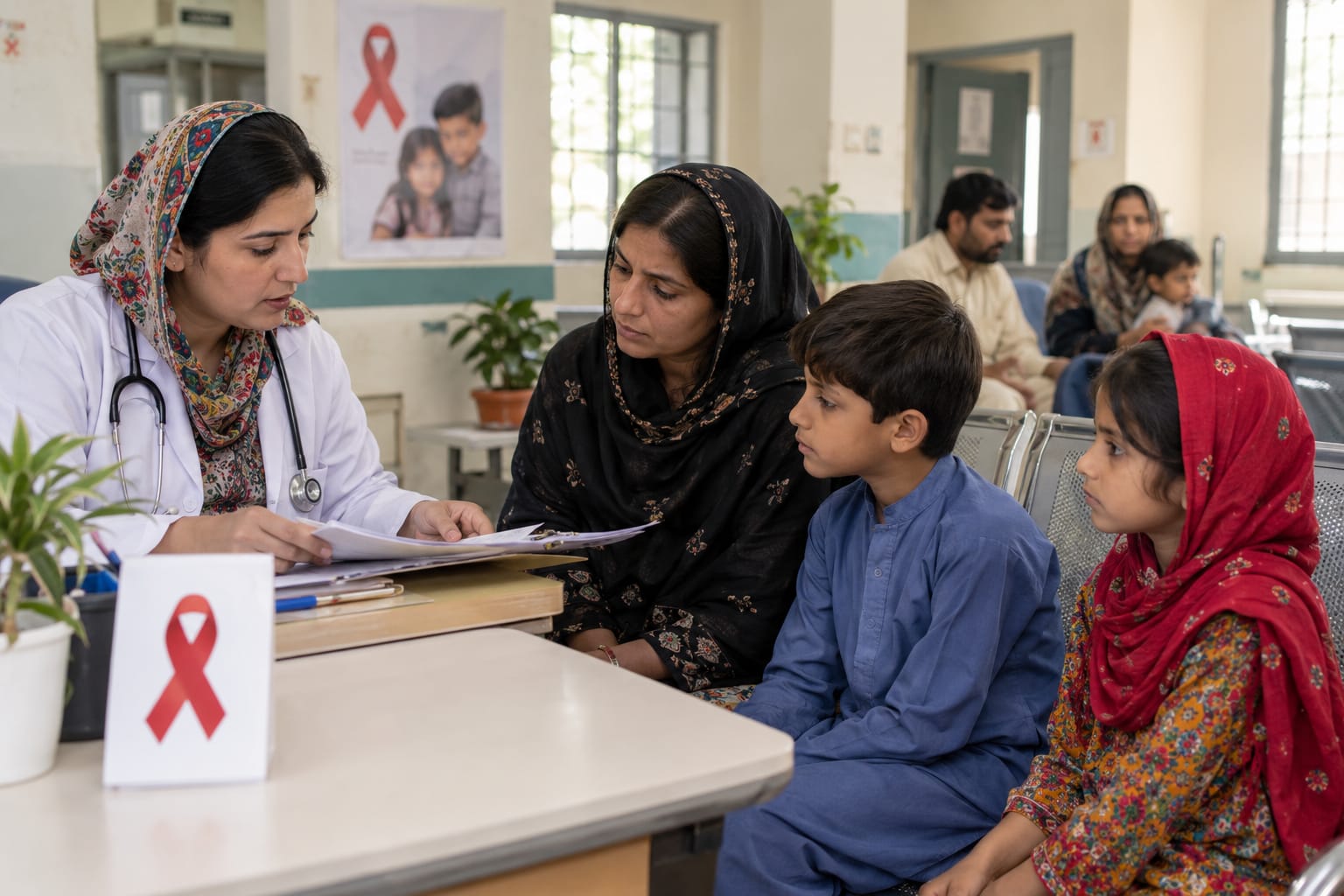
In August 2025, Ayesha Aftab took her children to Kulsoom Bai Valika Hospital in Karachi for treatment after they developed symptoms that appeared to be typhoid or malaria. Her youngest son, Muhammad Rehan, developed a fever while waiting and was given an antibiotic injection. Despite treatment, his condition did not improve, while his siblings also remained ill for weeks.
Laboratory tests later delivered a devastating diagnosis: all three children had contracted HIV, the virus that can lead to AIDS if left untreated. Other families who sought treatment at the government-run hospital have reported similar infections, with at least six children later dying. Families have blamed unsafe medical practices, including the reuse of syringes and intravenous needles.
Government-ordered investigations into Valika Hospital have identified safety concerns, including improper handling of syringes. Authorities suspended some staff members and announced financial compensation for affected families. The outbreak also followed another major pediatric HIV outbreak in Taunsa, Punjab, where 331 children were reported to have contracted HIV between November 2024 and October 2025.
Health experts say repeated outbreaks highlight deeper weaknesses in Pakistan's healthcare system. Poor injection safety, inadequate infection-control practices, unregulated blood services, insufficiently trained healthcare workers and weak oversight continue to create risks for patients, particularly children in underserved areas.
Experts warn that healthcare facilities can become a pathway for HIV transmission when basic infection-prevention standards are not followed. They also say Pakistan's weak disease-surveillance system makes it difficult to determine the true scale of HIV transmission among children and the wider population.
Children who contract HIV face lifelong treatment as well as social stigma and discrimination. Some families report children being denied admission to schools and hospitals after their HIV status became known. Parents also describe difficulties finding healthcare providers willing to treat children with HIV for unrelated medical conditions.
The government has announced new measures aimed at reducing the risk of healthcare-associated HIV transmission, including HIV screening before surgeries and a nationwide ban on certain reusable syringes. The measures are intended to prevent unsafe injection practices and reduce the chances of future outbreaks.
Health advocates say stronger infection-control systems, effective monitoring and public awareness are essential to protecting children from preventable HIV infections. They also stress the need to reduce stigma so children living with HIV can access healthcare, education and social support without discrimination.
Reference: