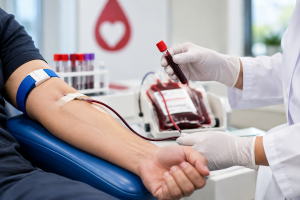
A study conducted at Fauji Foundation Hospital, Rawalpindi, has assessed the appropriateness of platelet transfusion practices against the 2024 guidelines of the British Society for Haematology (BSH). The research aimed to evaluate compliance with recommended transfusion practices and identify patterns of non-compliance across different clinical settings.
The descriptive cross-sectional study was carried out at the Department of Haematology and Blood Bank, Fauji Foundation Hospital, from July 1 to December 31, 2025. A total of 260 patients who received platelet transfusions during the study period were included. Researchers recorded demographic information, clinical diagnoses, indications for transfusion and the departments requesting platelet components.
The appropriateness of each platelet transfusion was assessed according to the 2024 BSH platelet transfusion guidelines. The collected data were analyzed using SPSS version 29. Transfusion practices were classified as either compliant or non-compliant, while the relationship between patients' diagnoses and guideline adherence was assessed using the Chi-square test.
Adults represented 56.2 per cent of the study population, while paediatric patients accounted for 43.8 per cent. Females made up 66.5 per cent of the participants. The largest proportion of platelet transfusions was administered in neonatal intensive care units (NICUs), accounting for 18.1 per cent of cases. This was followed by oncology units at 15.4 per cent, intensive care units (ICUs) at 14.2 per cent, medical wards at 14.2 per cent and paediatric wards at 14.2 per cent. Other clinical departments accounted for the remaining 23.9 per cent.
Overall, 161 platelet transfusions, representing 61.9 per cent of the total, were found to comply with the recommended BSH guidelines. However, 99 transfusions, or 38.1 per cent, were classified as non-compliant.
The findings indicate that while overall adherence to platelet transfusion guidelines was relatively substantial, a considerable proportion of transfusions did not meet the recommended criteria. Non-compliance was particularly observed in clinical settings outside haematology.
The study highlights the importance of strengthening transfusion management practices and improving awareness of evidence-based platelet transfusion guidelines among healthcare professionals. Better adherence could help enhance patient safety, reduce inappropriate transfusions and support more effective utilization of limited platelet resources.
References:
https://journals.riphah.edu.pk/index.php/jiimc/article/view/2981