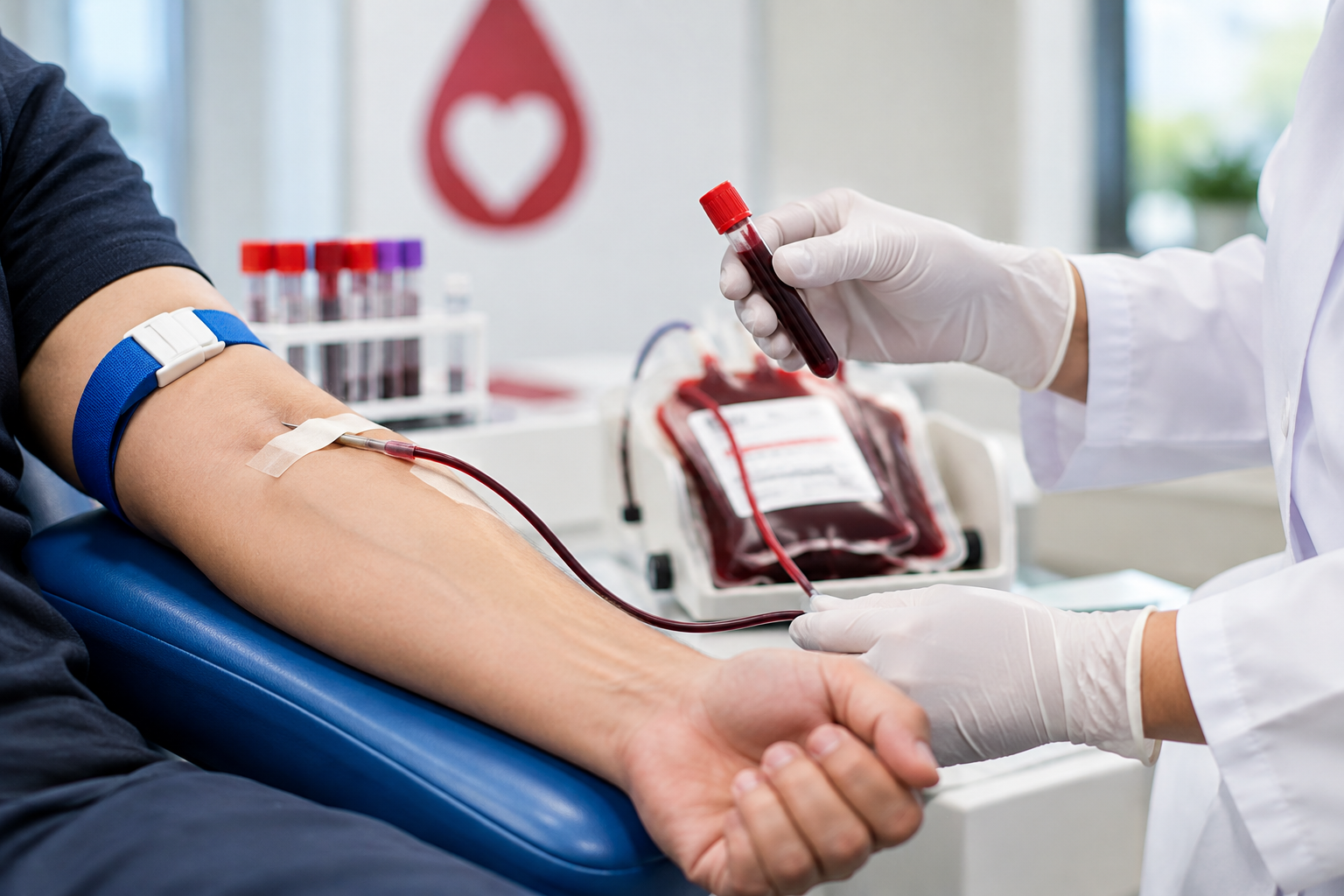
Blood transfusion is an essential, lifesaving medical treatment, but unsafe transfusion practices can increase the risk of spreading blood-borne and transfusion-transmissible infections. Screening donated blood for infections such as hepatitis B virus (HBV), hepatitis C virus (HCV), HIV, syphilis and malaria is therefore crucial to maintaining a safe blood supply.
A cross-sectional study conducted at Akhtar Saeed Trust Hospital in Lahore assessed the frequency of transfusion-transmissible infections among blood donors between January 2020 and September 2022. The study included 9,114 blood donors who provided samples after informed consent. Blood samples were screened for HBV, HCV, HIV and VDRL using a chemiluminescence immunoassay, while malaria parasites were assessed through peripheral blood examination.
The study found that 591 out of 9,114 donors, or 6.48%, tested positive for at least one transfusion-transmissible infection. HCV recorded the highest prevalence, with 324 donors (3.7%) testing positive, followed by HBV in 170 donors (1.9%). HIV was detected in 33 donors (0.4%), while 64 donors (0.7%) tested positive through VDRL screening. No malaria-positive cases were identified among the blood donors.
The average age of the participants was 27.8 years. Of the total donors, 961 (10.54%) were voluntary donors, while 8,153 (89.45%) were replacement donors.
The findings indicate that although the overall frequency of transfusion-transmissible infections among blood donors was relatively low, continued screening and appropriate donor selection remain essential for blood safety. Regular testing can help reduce the risk of transmitting infections through blood transfusions and protect patients who depend on safe blood products.
The study also highlights the importance of continuous improvements in blood-screening practices, donor education and infection-control measures to address both established and emerging blood-borne pathogens. Strengthening blood safety systems can play an important role in ensuring a reliable and safer blood supply in Pakistan.
References:
https://www.researchgate.net/publication/414288422_FREQUENCY_OF_TRANSFUSION-TRANSMISSIBLE_INFECTIOUS_DISEASES_AMONG_BLOOD_DONORS_AT_AKHTER_SAEED_TRUST_HOSPITAL_LAHORE_PAKISTAN